What is the resolution of a light bulb camera?
What is the resolution of a light bulb camera?
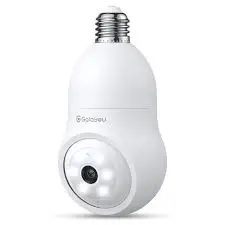
The resolution of a light bulb camera is a crucial factor to consider when choosing a camera for home security monitoring or surveillance. In general, the resolution of a camera refers to the number of pixels that the camera can capture in a single image or video frame. The more pixels that the camera can capture, the higher the resolution of the camera, and the more detail that it can capture.
Most light bulb cameras available in the market offer resolutions ranging from 720p to 1080p, which are considered to be high definition (HD). Some advanced models may offer 4K resolution, which is even higher than HD and provides extremely detailed images. The resolution of the camera will determine how well it captures the images and videos, and how far it can zoom in without losing details.
Higher resolution cameras are more expensive than lower resolution cameras. However, they can offer more features and better image quality, making them ideal for high-demand applications such as security monitoring. Cameras with higher resolutions can capture more details and provide better clarity in the images captured.
The resolution of a camera is measured in pixels. The higher the number of pixels, the better the resolution of the camera. For example, an HD camera with a resolution of 720p can capture images with a resolution of 1280 x 720 pixels. Similarly, a camera with a resolution of 1080p can capture images with a resolution of 1920 x 1080 pixels. Cameras with higher resolutions will have even higher pixel counts.
Another factor to consider when choosing a light bulb camera is the aspect ratio of the image or video it captures. The aspect ratio refers to the proportion of the width and height of the image or video. The standard aspect ratio is 16:9, which is used in most HD and 4K cameras. However, some cameras may offer different aspect ratios, such as 4:3 or 3:2, which are found in some point-and-shoot cameras.
When choosing a light bulb camera, it's important to ensure that the resolution and aspect ratio of the camera are suitable for your needs. For example, if you need to capture clear images of people's faces or license plates, you may need a camera with a higher resolution than 720p. Similarly, if you need to capture a wide area, you may need a camera with a wider field of view.
In addition to the resolution and aspect ratio, there are other factors that can affect the quality of the images and video captured by a light bulb camera. The lens quality, lighting conditions, and the camera's field of view can all play a role in the quality of the images captured.
The lens quality is important because it determines how well the camera can focus on and capture details. A camera with a high-quality lens will be able to capture clearer images with better detail. Similarly, lighting conditions can impact the quality of images captured by a camera. Cameras with good low-light capabilities can capture clear images even in poorly lit areas.
The field of view of the camera is also important when choosing a light bulb camera. A camera with a wider field of view can capture more of the surrounding area, while a camera with a narrower field of view may be better suited for monitoring a specific area or entry point.
In conclusion, the resolution of a light bulb camera is a crucial factor when choosing a camera for home security monitoring or surveillance. The resolution of the camera determines how much detail it can capture and how well it can zoom in without losing details. When choosing a camera, consider the resolution, aspect ratio, lens quality, lighting conditions, and the camera's field of view to ensure that it meets your specific needs.
.jpg)


评论
发表评论