What is the storage capacity of a light bulb camera?
What is the storage capacity of a light bulb camera?
Light bulb cameras have gained popularity in recent years because of their discreet design and ease of installation. They offer a convenient way to monitor your home or office from anywhere, anytime. One question that often comes up when discussing light bulb cameras is their storage capacity. In this article, we will explore the storage capacity of light bulb cameras and the different options available.
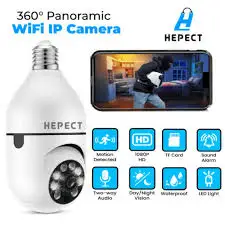
Light bulb cameras typically store video footage either locally or in the cloud. Local storage means that the video footage is saved on a memory card or a network-attached storage device (NAS). Cloud storage means that the video footage is stored on a remote server, usually provided by the camera manufacturer or a third-party service. The amount of storage available varies depending on the type of storage used.
Local Storage Capacity
Light bulb cameras that offer local storage usually have a memory card slot or a NAS port. The amount of storage available depends on the storage capacity of the memory card or the NAS device. Most cameras support memory cards with capacities up to 128GB, which can store several hours of video footage. However, some cameras support larger capacity memory cards, which can store several days of video footage. It is important to note that the higher the storage capacity of the memory card, the more expensive it is.
NAS devices offer higher storage capacity than memory cards and can store weeks or even months of video footage. They are ideal for users who need to store a large amount of video footage for a long period. NAS devices usually come with multiple hard drives that offer several terabytes of storage. They are also expandable, meaning you can add more hard drives to increase the storage capacity.
Cloud Storage Capacity
Light bulb cameras that offer cloud storage usually provide a limited amount of free storage, typically around 7 to 30 days. After the free storage period, users must subscribe to a paid storage plan to continue using the cloud storage service. The amount of storage available varies depending on the subscription plan chosen. Basic plans usually offer 7 to 30 days of storage, while premium plans can offer up to 30 or 60 days of storage.
Another factor that affects the amount of storage available is the video quality. Higher quality video footage requires more storage space. Most cameras offer different video quality options, such as 720p, 1080p, or 4K. Higher quality video footage may require more storage space, but it also offers better image clarity and detail.
Some cameras also offer motion detection and smart recording features that can help save storage space. With motion detection, the camera only records when it detects motion in the frame, which reduces the amount of footage recorded. Smart recording uses artificial intelligence to analyze the video footage and record only the important events, such as when a person enters the frame or when a door is opened.
In conclusion, the storage capacity of a light bulb camera depends on the type of storage used, the video quality, and the camera's features. Local storage options such as memory cards and NAS devices offer varying amounts of storage capacity, while cloud storage plans offer a limited amount of free storage with the option to purchase additional storage. It is important to consider your storage needs when choosing a light bulb camera and to ensure that the camera's storage capacity is sufficient to meet your requirements.
.jpg)
.jpg)

评论
发表评论